
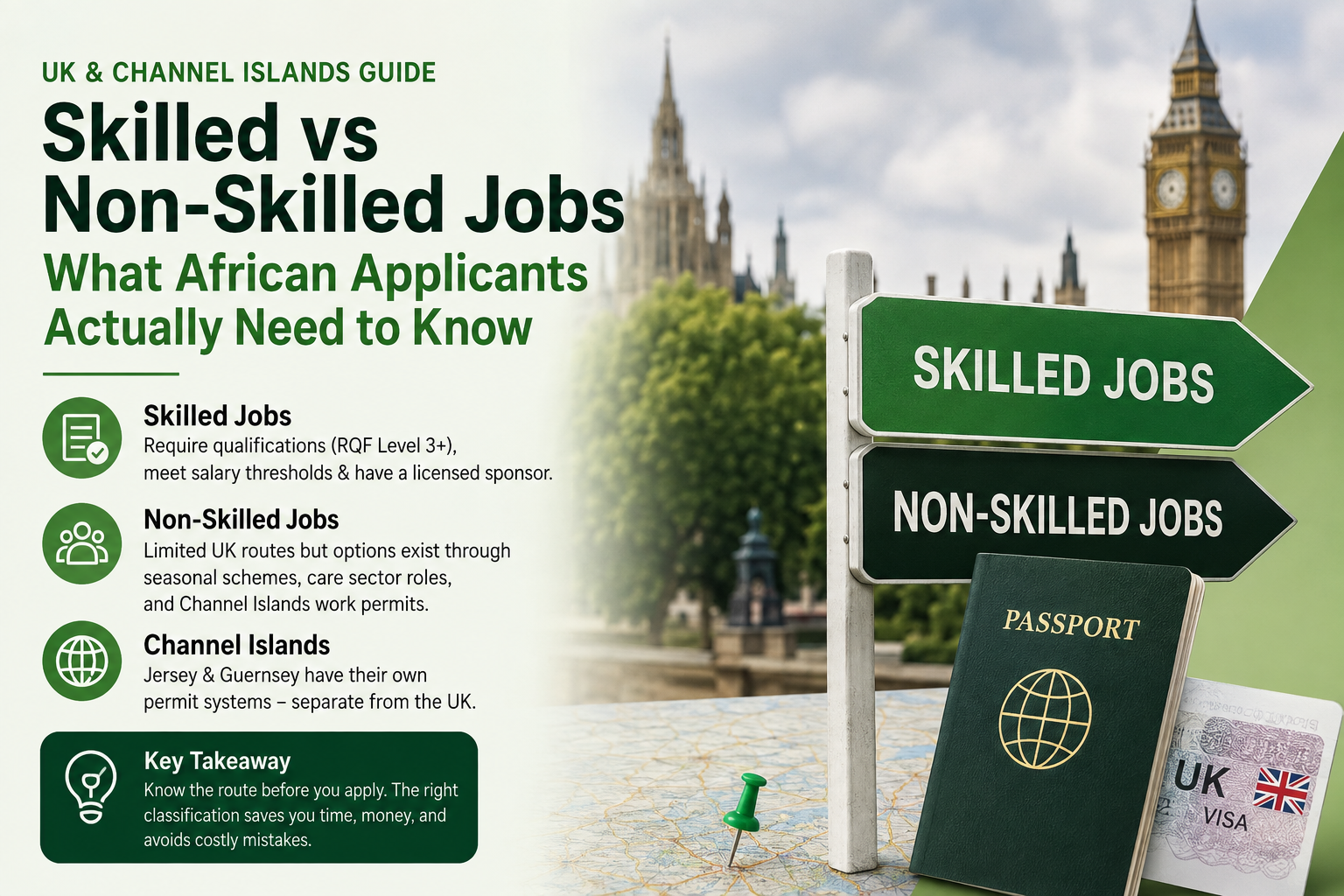
Most failed visa applications trace back to one mistake: not knowing whether a target job was classified as skilled or non-skilled. This guide breaks down how the UK and Channel Islands actually draw that line, and how African applicants can use it to choose a realistic path abroad.

๐’๐ฎ๐ฆ๐ฆ๐š๐ซ๐ฒ: Most rejected visa applications and wasted relocation savings trace back to one root problem: applicants didn't know whether their target job was classified as "skilled" or "non-skilled" โ€” and that classification decides almost everything else. This guide explains the real difference, why it exists, and how to use it to pick a realistic path into the UK or Channel Islands.________________________________________๐–๐ก๐ฒ ๐“๐ก๐ข๐ฌ ๐ˆ๐ฌ๐ง'๐ญ ๐‰๐ฎ๐ฌ๐ญ ๐š ๐“๐ž๐œ๐ก๐ง๐ข๐œ๐š๐ฅ๐ข๐ญ๐ฒ"Skilled" and "non-skilled" sound like descriptions of effort or difficulty. They're not. They're legal categories that determine whether a visa route exists for a job at all.A care worker lifting patients all day is "skilled" under UK immigration law. A constru...

Free Account Required

Create a free account or sign in to read the rest of this article and join our community.